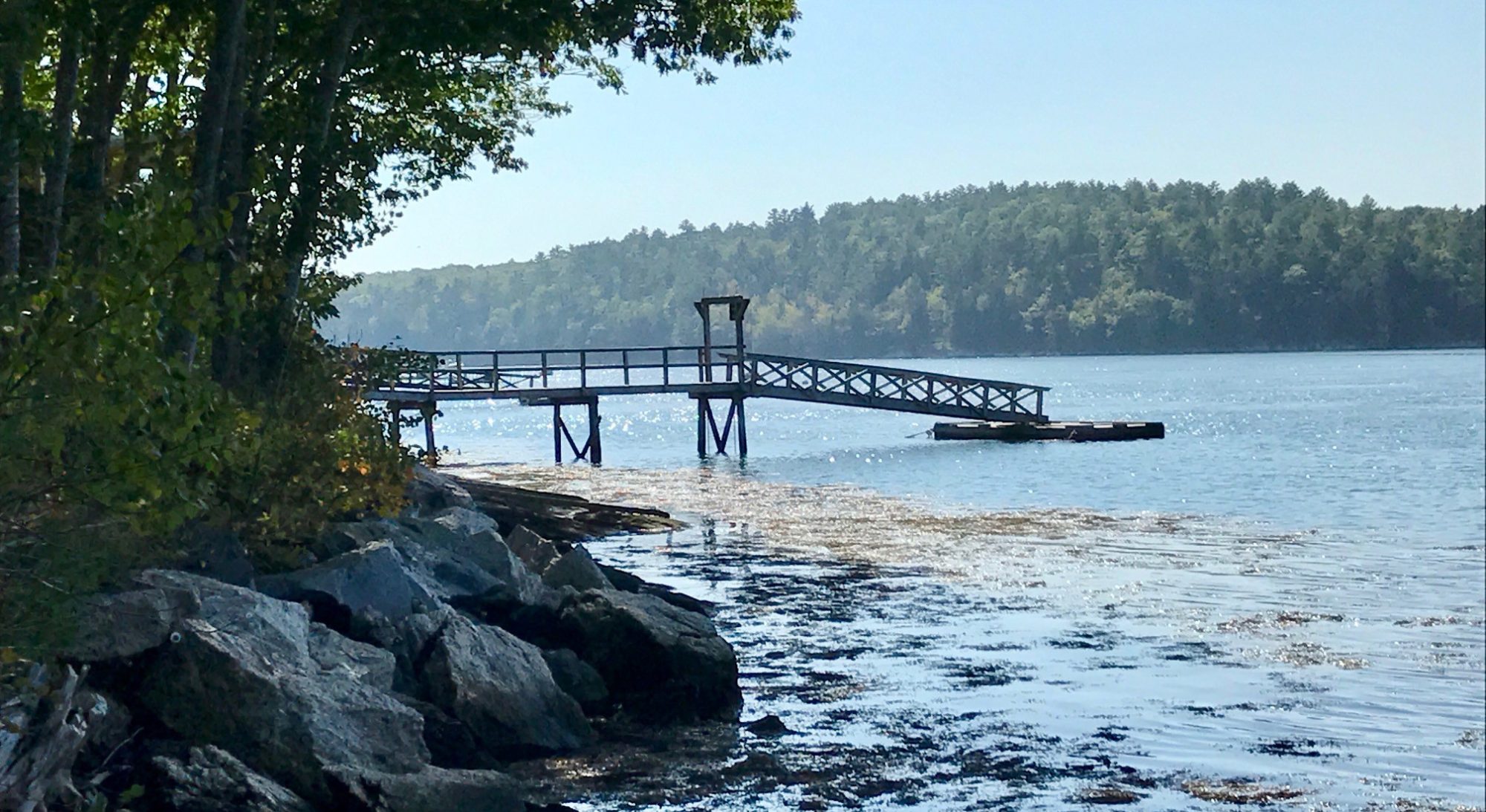

Wow, back to back blog posts! That’s what happens when your wife is away and you’re all alone. No, this isn’t a pity party – but Paula is in Argentina and I have some time on my hands. Last weekend was the Memorial Day weekend  – for many, the beginning of summer. Knowing Paula was going to be gone, I organized a little guys weekend at La Escondida del Mar (our little slice of paradise in Maine). That’s a tough weekend to have a guy’s weekend – too many family gatherings – but I guess Ron and Joe’s respective wives went soft on them and gave the green light (thank you Jeanine and Cindy!). The plan was to meet in NYC Thursday night and drive up very early on Friday morning. The weather forecast fluctuated all week, but Friday was shaping up to be a warm day. After being dormant for 2 years, I had had the pool rehabilitated
  (and returned it to a saltwater pool), and newly opened that week. Come hell or high water (or cold air temps), I was going to use the pool at least once on the weekend. We made it up to Maine by 11 am, and quickly decamped to the pool. Ed, my pool guy, had planned to set the pool temp at 80. 80!?? Far too warm for my cheap pocket as I thought about the propane bills from the previous winter. 75 sounds pretty good. No…75 isn’t good…75, to skin temperature at 96, is pretty damn cold! In any case, after the first shock of cold, the pool felt nice, and we spent a lazy afternoon listening to music and drinking beer. The three of us had different tastes in music, with some overlap. I am firmly rooted in the 70’s (Zeppelin; Floyd; etc.); Joe was stuck in the 80’s (Style Council; Tears for Fears); and Ron
  is our festival guy (Umphrey’s McGee; Avett Bros; Government Mule). Having one Bluetooth wireless speaker complicated things, and there was frequent hijacking of the Bluetooth connection – but I came out with a new appreciation for Paul Weller and Umphrey’s McGee (go download the Zonkey album, now!). Anyway, despite the weather turning cool on us (we went from pool and beers to fleeces and bourbon by the firepit in 24 hours), it was a great weekend of fun, and resulted in my first explorations of the Boothbay area, and a few small reviews for those that may be enticed to come here.
Before I get into the (mini) reviews, I do want to touch on the subject of trust.  Maine people are an interesting study in contrasts. While much has been written about the taciturn Mainer who doesn’t trust people “from away” – we have been pleasantly surprised by the trust extended to us in our encounters with most businesses here. As some of you probably know, a second house isn’t easy to maintain, especially getting one that wasn’t used much and had some undiscovered maintenance issues. As a result, there are a lot of on-going needs (dock service; landscaping; pool; snow plowing; etc.) and the inevitable unexpected issues (appliance repair; HVAC repair; etc.). We’re used to arranging for service, and providing the obligatory credit card to either pay, or guarantee payment – but it seems that here in Maine, trust still exists. I can’t tell you how many of our service providers have just asked for a billing address – no credit card needed, I’ll just send you a bill! It even extends to retail business – I’ll talk in a bit about Barb Scully’s Lobster
  and Oyster stand at her house – hundreds (probably thousands) of dollars of oysters and lobsters open to the public, with a prominent sign that indicates if she isn’t around, take what you want and leave the money – the honor system!! This morning (in NYC), as I dreamed wistfully about how trusting Mainers were…I was jarred awake at 6am by my cell phone – it was the water truck company (my pool needed to be topped off) asking if there was anyone home (in Maine) since they don’t take credit cards, prefer cash, and wanted payment before delivering the water! Ahhh, back to reality!
As I said, the weekend was good fun, and we took the opportunity to explore a  bit. First stop, on Friday afternoon, was to two businesses, side by side, in Damariscotta that I’d like to give a shout out to. Fisherman’s Catch, located on Main St. just as you cross the bridge from Newcastle, is a nice little seafood purveyor. It’s a small shop, but fully stocked with plenty of fresh lobsters; clams; mussels; oysters; scallops; fish – all fresh, and most locally caught. It’s my “go to” local seafood seller, and I highly recommend it. If you’ve read this blog before, you might have caught my post on Oysters, where I speak prominently about oyster farming in Midcoast Maine, particularly on the
  Damariscotta. I am thrilled to be living so close to such an amazing fishery, and Fisherman’s Catch always has several varieties to choose from. Heath Reed is the owner – always a smile, always helpful. We ended up picking up 3 dozen Norumbegas – oysters so fresh I have no doubt they were harvested that morning – and 4 pound of Littleneck clams for a spaghetti vongole we planned on for Saturday night. Note that they will also ship, overnight,
  anywhere in the U.S. Right next door is Riverside Butcher. August Avantaggio opened the shop a couple of years ago, and I’m happy to see it seems to be thriving. Oftentimes specialty shops like this (especially in small towns) don’t survive. Riverside is a full-service butcher shop – they always have amazing meat and other items (including some non-traditional, but wonderful, empanadas), and what they don’t have on display, they can get, or they can cut. On a previous visit I was pleasantly surprised to find that August was familiar with Argentine Asado
  and could provide the types of cuts I was looking for to supply the asado. I highly recommend this shop as well. The similarities in both shops highlights everything you want in a business: (1) they are knowledgeable about their product; (2) their prices are reasonable; (3) their quality is outstanding; (4) they are always ready with a smile. These are the types of shops we all need to support – and they both have my business! Between the oysters and steaks, we were set – and I was able to get both without walking 5 steps between them!
The next place I want to review was, for us, the highlight of our trip. We woke up Saturday to a 30-degree temperature drop (common, unfortunately, at this time of year in Maine), and overcast skies. There would be no swimming today. Well – didn’t matter…just made the morning coffee that more pleasant. Let me digress here for a second on coffee. I started out my adult life hating coffee, but soon progressed to drinking a milked up, sugared up beverage that I’m sure was flavored with a touch of coffee. Over time, the proportion of milk  and sugar decreased, until by my early 30’s, I was drinking it like my father used to – black. By my late 30’s I was beginning my transition…to full on coffee snob. Starbucks was my entrée. This continued through my 40’s, progressing well beyond Starbucks (too pedestrian) – when I first met Paula I was hitting up Stumptown on 29th and Broadway with my pal (Hi Jim!) once a week, parsing through all of the beans to get the freshest, and only using a burr grinder on them. And then something happened. It was a Sunday morning…and I discovered with horror that I had run out of Stumptown beans. It was really early (another sad by-product of getting older – you can’t sleep), and the only place open was a corner bodega, where I found this – a little red tub of Folgers Classic Roast. What! Was this what I was reduced to? However, desperation
  for my morning brew overcame my disgust. I dug out the old Mr. Coffee machine we had in the closet, and brewed up a cup (thankfully, it had a “bold” setting). And to my surprise – it wasn’t bad. In fact, it was pretty darn good. I managed to get some of my precious Stumptown beans the next day, but not wanting to waste the tub of Folgers (I am an honorary Yorkshireman), I began blending it in with the Stumptown. And so, I devolved, so to speak, gradually turning a 90/10 blend of Stumptown/Folgers into a 10/90…and eventually 100%, full on Folgers. If this keeps up, I can envision returning to milk and sugar in my 70’s, and by my 80’s I will be back, once again, to diapers and hating coffee (no…just kidding about the diapers!). Ok, where was I? Oh, yeah coffee. Coffee on a cold Maine morning is wonderful. Unfortunately, Ron, while putting on a good game face, is still in the coffee snob portion of his life…Joe seems to be transitioning, and I think he was fine with the Folgers. Ok, where were we? Oh yeah – the highlight of the weekend. I’ve completely wasted this paragraph, so time to start another.

Bet’s Famous Fish Fry is a local fish shack in Boothbay. If you drive down Rt. 27 to Boothbay, you can’t miss it – just before Mr. Coulombe’s new roundabout, on the left – a pretty little shack with picnic tables, and lots of people. Now, this isn’t Red’s Eats. You won’t find a lobster roll here, which is  why, I suspect, that it seems to be more of a local place than a tourist destination. For me (and I’m guessing for the locals), I hope it stays that way (so why are you writing about it on a blog???? Because it’s my blog, that’s why!). Tourists come to Maine and they want lobster rolls. I can hear many people now “Oh fish sandwich…big deal – what’s so great about that?”. It is a big deal. Bet’s has, hand’s down, the best fish sandwich you will have…anywhere…ever…period. First let me comment on the portions. You approach the window and see the menu – fried fish, several different ways. And not just any fish – fresh haddock. Ok, we all agreed – fish sandwiches all around. 3 fish sandwiches, please. “You want the whole or half sandwich?”. Oh – come on! Three big guys, are you kidding – whole please.

She could tell we were neophytes. “It’s a whole pound of fish on the sandwich – you sure?”. By now our confidence was starting to crack…a whole pound? We looked at each other and gave her a very shaky nod yes. Sensing our uncertainty, she said “Let me show you a whole sandwich” – as our eyes followed her hand, we were in awe at the enormity! “Half sandwiches, please” we quickly said in unison. No time to be brash – an unfinished sandwich would shatter our reputations. She smiled knowingly, took our money (cash only please), and we wandered over to the picnic tables to wait.  The sandwiches come with your choice of homemade tartar sauce, or homemade dill sauce. As newbies, we asked for both (good choice, as we were to find – both are fantastic). No fast food here – each order is cooked up fresh. You can tell just from the fragrance of frying fish that they are serious about the food here – the oil is fresh. One thing that always puts me off (and is immediately noticeable by the odor) is when a place stretches between oil
  changes on its fryer. Not here – only the clean smell of fresh oil. We waited about 10 minutes, and the sandwiches arrived. The half sandwiches. Unbelievable! The fish is battered, but the coating isn’t really heavy. The filets are thick pieces of haddock. They were fried to a golden brown and piled high on a bun. Even with a half sandwich, it’s a little tough getting your mouth around the bun – you’ll have to make an exploratory bite first to fit
  it in. Let me just say, here and now, that you won’t find a better fish sandwich anywhere. Joe lamented the fact that, after having the sandwich at Bet’s, he’ll never be able to eat another fish sandwich other than here, as all others will pale in comparison. Note that the drinks will be from a vending machine; and we didn’t try the fries (I’m sure they are equally good – but there was no sense in filling up on fries…and we’d have never finished them anyway). Even if the portion size were not so immense, the quality of the fresh fish fried to perfection would put this place on top of my list (and by the way – $9 for a half sandwich – that’s a steal!) Do not miss this spot.

The day was still relatively young, so we wandered around the Boothbay peninsula a bit. It’s a beautiful part of Midcoast Maine – lots of Islands, inlets, peninsulas, etc. We took a spin around Southport Island, and headed to Cozy  Harbor, passing Robinson’s Wharf on the way (will be subject of another review at some point, but needless to say I’ll be giving it a thumbs up). Oliver’s is a small, upscale restaurant located in Cozy Harbor, a picturesque little village on the east side of Southport Island (no ferries needed – it’s connected to the mainland via a bridge). I’m not sure what it was before, but it’s been renovated within the last few years, and part of Paul Coulombe’s
  growing empire (Paul Coulombe is a wealthy businessman that lives on Southport – it appears people have a love/hate relationship with him, but from my perspective, he seems like he is a big supporter of the area). Paula and I have tried to visit Oliver’s on two previous visits, but were thwarted on both occasions, once because it was closed and once due to a private party. The location is perfect, right on a stunning little harbor. Oliver’s itself,
  while beautiful and clean inside, feels a little artificial. Perhaps it’s because I’m used to (and expect) a little wear and tear on these seaside places, and I’m not (yet) a local. In any case, we were there today just for a quick bloody mary (the previous night’s bourbon tasting, preceded by wine, beer, and champagne, had done us in – so a bloody mary was a good entrée back). We were
  shown to a nice outdoor table under a covered balcony. Service was friendly and fast, and three bloody mary’s were soon in front of us. They were quite good, with a large shrimp and celery as the accompaniments – and very spicy as I like them. I was shocked, however, to find out that they actually didn’t contain any vodka. Apparently, Oliver’s doesn’t have a license to serve distilled spirits – so their cocktails are made with – wine. Yup, wine. Well, to be fair, it’s a specialized fermented wine product that’s been developed just for situations like this where an establishment has a beer/wine license, but not one for hard liquor. Anyway, I honestly couldn’t have noticed the difference between it and one made with vodka. I have no idea how the food is – we’ll return sometime for a follow-up visit and try the food – but I can give it a provisional thumbs up as the location is stellar, the service is great, and the bloody mary was just right.

By now it was late afternoon, and we needed to get to the Hannaford’s in Damariscotta to pick up a few things for dinner. I then remembered another place that I’d been wanting to try – Round Top Ice Cream. It wouldn’t be summer in Maine without a trip to one of the many seasonal ice cream stands dotting this beautiful state. Round Top, named for a high point just above  Damariscotta, started life as a dairy farm just after World War I. The ice cream stand has been there since the 1920’s…yes, almost 100 years! Started as a way to utilize more of the production from their prize Holsteins, the dairy farm itself closed in 1968, but the ice cream stand has survived and thrived. I love places like this…unpretentious, simple. I like the fact that, as far as I can tell, they employ local high school students – a perfect fit as it’s a summer business. While it was pretty cool when we visited, there was still quite a full parking lot – always a good sign. Upon entering, we were charmed by the simplicity – a large converted barn, with a simple counter and about 10 coolers behind. While they did have a soft serve machine, it was clear that hand dipped cones were what they were about. We were a little overwhelmed with all the flavors, and particularly intrigued by the flavor “Alewife Pudding”
  (alewife is a local fish similar to a sardine; turns out this was just Round Top having fun, as it was actually chocolate with M&M’s and espresso beans). In the end, it was Strawberry and Banana for Joe; Salted Caramel and Eagle Tracks (a vanilla/oreos/reese’s pieces mix) for Ron; and Salted Caramel and Butter Pecan for me. This is what ice cream is (or should be) all about – fresh, homemade ice cream; lots of great flavors; families just having fun. If you come to Midcoast Maine, this is highly worth a stop.

Saturday night was pretty low-key – we had learned our lesson the previous night and went easy on the bourbon. Dinner was a nice Spaghetti Vongole (unfortunately without fresh parsley, as both Joe and I had been fooled by a bunch of Cilantro masquerading as Parsley – but it didn’t matter),  accompanied by a Saint Emilion that Joe had kindly brought from his cellar. We did finish the evening around the firepit but went easy on the drinking; as a result, we woke up Sunday morning in much better shape than the previous morning. A full breakfast was in order – eggs, bacon, the works. It was, unfortunately, another overcast and cool day, but no matter. The salt air and pine scent of coastal Maine can’t be replicated – and yet another reason I love it there. By early afternoon, we were up for another adventure. Today it was time to have a lobster roll – the boys had been promised. First, let me say – while I like lobster, it’s one of those things I can have once or twice a season, and I’m happy not to have more. Paula could eat it every night of the week, but I find a little goes a long way. While this may seem a bit blasphemous in Maine, I’ve increasingly found that this is a sentiment shared by many Mainers. Tourists go crazy for lobster, and particularly, lobster rolls.
  The Maine lobster roll has become one of the unofficial symbols of the state. Every place has their own “recipe” so to speak (it’s really about overall preparation, as there isn’t much to a lobster roll) – but generally an authentic Maine lobster roll will be fresh lobster piled on griddled, split top hot dog roll. You’ll find these split top hot dog rolls all over New England, and they are a perfect vehicle for the lobster, as you can griddle up the roll on both sides to get a crispy brown exterior. Various places will change up the way they prepare the lobster inside the roll – some
  places only use butter; some only use mayo – but simplicity is best. You won’t find lettuce or other accompaniments. Today we were going to the Boothbay Lobster Wharf, which I had heard served a fantastic (and huge) lobster roll in a nice setting. It’s right on the water, with a little complex consisting of an indoor bar, an outdoor lobster stand steaming whole lobsters, and a window serving lobster rolls and other sandwiches. While the day was cool, we decided to get some lobster rolls and a beer, and eat at one of the many outdoor tables by the water. Your choices on lobster rolls were the regular or
  large. The large wasn’t cheap ($34 – but lobster rolls in Maine, even a regular one, are going to set you back around $25). Joe was up first and was on the verge of getting the regular size – but Ron and I had to intervene and mention that the regular was probably the ladies/child portion. He quickly switched to the large, not wanting to come across as wimpy. Ron then ordered the regular, and I got the crab roll…Joe was on his own. Haha! We grabbed a beer (Ron continued with his mid-day bloody mary) and waited for our rolls. The setting is just perfect – while it was a little cool that day, this was
  the place to have a lobster roll – right on the water; a working lobster wharf; gorgeous view of the Maine coast. Joe went to pick up the rolls, and we enjoyed the view. We noticed he was struggling with the tray a bit as he approached with our food. His lobster roll wasn’t just large – it was ginormous!! There must have been the equivalent of two full lobsters stuffed into the roll (which you couldn’t even really see for the lobster). Our rolls seemed anemic by comparison, especially my runty crab roll. While he had a brief moment of hesitation on how he was even going to eat it, Joe quickly tucked in, and before we knew it, our rolls were resting comfortably in our (ample) bellies. I like the lobster rolls here – for me, I like my lobster roll with a
  touch more mayo than most places use – and the Boothbay Lobster Wharf was just right. My crab roll was delicious – I usually opt for crab rolls instead of lobster rolls – full of sweet Maine crab meat bound with just a touch of mayo. This place is all you want in a lobster roll joint – absolutely fresh seafood; beautiful rustic setting; fast and friendly service. So far, my favourite lobster roll place in Midcoast Maine. We reluctantly waddled back to the car to continue our meanderings, fully satisfied with our choice.

After taking a nice drive out to see the Pemaquid Point lighthouse, we wandered back to Edgecomb to prepare for dinner. Actually, we had quite stuffed ourselves all weekend, and none of us were thinking about anything big for dinner. Ron wanted to try to get some live lobsters to bring back to  Jeanine (he had an extremely early flight out the next morning), but when we got to Fisherman’s Catch, it had just closed (early closing at 4pm on Sundays). No worries – I remembered a place that just might be open – a place I had been wanting to try for a while. We headed out of Damariscotta and took the River Road turnoff to head down the northeast, Damariscotta river side of Edgecomb. Our destination – The Lobster Store. Also called Barbara Scully’s Oyster and Lobster Market. Barbara Scully is a local legend in these parts (“these parts”? – what am I – a cowboy? sorry, but it sounded right!). She was instrumental in getting oyster farming started on the Damariscotta River.
  Working with the Darling Marine Center, Scully (a zoologist by education), Scully began experimenting with oyster farming on the Damariscotta almost 32 years ago. Her Glidden Point Oyster Farm was one of the first oyster farms in this area of Maine, but many more soon followed. Now, the oysters from this region are well known, and enjoyed, all over the world. Barbara sold Glidden Point a few years ago, but then opened her roadside market (it’s a quaint little building adjacent to her house) selling clams, fresh oysters, and lobsters. We pulled up to the small building and breathed a sigh of relief as we noticed it was open. As mentioned previously, Barbara operates on the honor system when she isn’t around – which is remarkable. In this case we were
  greeted first by one of her dogs, and then Barbara herself came out. I introduced myself (as I expected to be a quasi-regular in these parts, and my house was less than 15 minutes away), and we talked about the oysters she had available. There were three choices: Dodge Cove; Norumbegas; and Ring Points. Barbara spent some time talking to us about how each was grown and harvested slightly different, resulting in different flavors. She also talked about the unique characteristics of the Damariscotta River, and various pinch points which stir up the phytoplankton during tides, providing a great environment for oyster growth. Unfortunately for Ron, she had just sold the last of her lobsters, but we picked up 3 dozen oysters (a dozen of each) and headed home. Barbara’s little shop is another one of those places I highly recommend – she is highly knowledgeable and stocks amazing product. Interestingly enough, we asked Barbara if she still ate oysters after all these years – she laughed and said she preferred a nice ribeye!

We headed back to the house and agreed that dinner was just going to be the oysters, and a little cheese/charcuterie that night. The oysters were, like Friday night, the stars. Accompanied by Joe’s house made mignonette, we polished them off in short order. Ron and I took the shucking duties (although Ron was roundly chastised for not cutting the oysters free of the shell for his  shucked oysters!). After another fire-pit night (along with one of my neighbors, Eric, who brought over two dozen fresh eggs from his chickens!), we called it a relatively early night. For Ron, this was the end of the weekend as he had that early flight. Joe and I had one last stop. Heading to the airport at midday on Monday, we got across the Wiscasset bridge and were presented with two choices. On the right, the granddaddy of all lobster roll shacks in Maine…the most well-known…the famous Red’s Eats. On the left, the
  relatively obscure (for those from away) Sprague’s. The line at Red’s was already quite long (at least an hour and a half) for this early in the season. Sprague’s had no line. The choice was easy (and one that was pre-selected as I already knew what I was doing). We pulled into the parking lot at Sprague’s, which, unlike Red’s, actually sits on the water. I’ve never understood the hype about Red’s. This has been written about many times, but it’s weird how celebrity starts. Red’s celebrity origins are a bit murky, but I think it was “discovered” in the pre-internet days through a couple of newspaper reviews out of state (perhaps the NY times?). It was always a well-known spot, going back to the 50’s – but over the years it has become the number one lobster roll destination for tourists – much to the displeasure of some locals, as it
  results in notorious delays and backups on Rt. 1 during the summer. Anyway, I’ve had lobster rolls from Red’s Eats – I’ve waited in that line before. They’re good…but I never found them to be better than lots of other lobster rolls. Bear in mind that I’m not an “aficionado” about lobster rolls – they are so simple (I think that’s part of their popularity – fresh and simple), it’s hard to
  get too excited about a particular lobster roll. Sprague’s is right across the street. Sprague’s always has parking. You’re rarely going to wait more than 30 minutes for your lobster roll. The lobster, like Red’s, is freshly steamed. You get about the same amount of lobster meat; and you pay slightly less at Sprague’s. So, we turned left into Sprague’s, ordered our lobster rolls, grabbed a picnic table, and watched the line at Red’s as it moved at glacial speed. The rolls were great. As good as Boothbay Lobster Wharf? For me, no, but pretty darn close. I like the slightly mayo-ier (is that a word?) version at Boothbay.

But it was nice sunny day; the lobster roll and lemonade were great, and a nice finish to the weekend. We pulled on to Rt. 1 to head to the airport and said goodbye to Wiscasset. Overall, a fantastic weekend in an awesome location with friends. Thanks to Ron and Joe for sharing the weekend with me, and for not letting me spend a dime during the weekend. For the rest of you – I encourage you to visit Midcoast Maine and explore this wonderful region. There are lots of things to do, but as I’ve found, it’s a bit like going back in time to a simpler time, where families can relax and enjoy a simple ice cream on a sunny Saturday.

 discuss his book of post-modernist poetry, Lemons and the Urban Dilletante”). Yes, I admit it – I am completely a dilettante. What is a dilettante, some of you may be asking (and, what the hell does it have to do with lemons!) – to quote the OED, a dilettante is “A person who cultivates an area of interest, such as the arts, without real commitment or knowledge”. As self-deprecating as I am, that’s a bit harsh. I prefer to define it as a dabbler – someone who approaches a field of interest from a purely amateur perspective.
 move on to the next passing interest. One year it was a garden. My grandfather used to have the most beautiful vegetable garden at his home in Caribou. It was quite large (too large for him and my grandmother), and he grew an astounding variety of vegetables – several varieties of carrots, potatoes, cabbages, beans, corn, tomatoes, squash, pumpkins, lettuces, spinach, onions, cucumbers, peas, beets, radishes, turnips – the list was endless. He used to have a local farmer plow his garden for him, and he was so meticulous
  – keeping notes on the weather and what he planted; rotating crops; staggering his plantings so he had vegetables all season long. He was most definitely not a dilettante. My approach, inspired by my grandfather, was, unfortunately, a textbook case in dilettantism. First the excitement, generated by moving to a townhouse that had a real backyard (in Florida) – finally, a fertile field in which to replicate my grandfathers beloved garden! Then the intense reading – at that time, with no internet, this involved multiple trips to the local bookstores, buying many books on backyard gardening, and reading late into the night. This period, for the dilettante, is probably the best part – dreaming about what you could accomplish with your own hands! I ambitiously measure off a plot, covering half of my backyard. The backyard had not been maintained in some time – so there were several days with weed whackers and a lawn mower to tame the wildness. Hard work is often the death of nascent dilettante ventures. In this case, I persevered. Next step was
  preparing the soil. After a half-hearted attempt using a hoe and shovel, I quickly realized that power tools were going to be necessary. Renting a roto-tiller turned out to be quite easy…using one was a different story. These machines must be featured in one of Dante’s circles – they are loud, they are smelly, and they alternate from not moving at all, to jerking your arms from their sockets – entirely exhausting. I quickly reset my expectations and reduced the size of the garden by half. Unfortunately, I didn’t reset my ambitions with respect to the amount and variety of what I had anticipated to plant – resulting in an overcrowded garden, and one that produced barely a few servings of each item I had planted. What followed was a frustrating few months of tending the garden – the horrible sandy soil of Florida proved great at growing weeds, and terrible at growing
  robust vegetables. At some point I just gave up trying to control the weeds, and let the garden go. Finally, I began to harvest and enjoy the fruits of my labor! The magic quickly wore off – while there is some pleasure in consuming vegetables that you grew yourself, you realize that it’s far easier, and cheaper, to buy better vegetables produced by professionals, from your local farmers market. That was my last attempt at large scale gardening (however there were many other attempts at more specific approaches – herbs; tomatoes one year; etc.) – like most dilettantes, I ticked the box and moved on to the next thing.
 their history to be interesting, and yet odd. Here you have a fruit that has so many uses in cooking, both as a flavoring, and more importantly, to introduce acid (which provides preservation qualities as well, something very important in those days), yet, it took almost 2000 years after their introduction before they began to be widely used in cooking. In any case, once they began to be used in cooking, their usage quickly spread, especially throughout the Mediterranean. We have Christopher Columbus to thank for bringing lemons to the New World – he brought lemon seeds to Hispaniola (now the Dominican Republic and Haiti), and cultivation rapidly spread throughout the warm climates of South and Central America, as well as parts of North America. Now lemons are an integral part of so many different cuisines – Italian, Greek, Moroccan, Caribbean Latin, Spanish, etc.

 and smooth than Italian ice. While traditionally made with citrus fruit, it can be made with a variety of flavorings – including almonds, coffee, and chocolate. Granita seems to have originated in Sicily, the land of my wife’s ancestors. One hot day, I happened to channel surf across a program on traditional Sicilian lemon granita. The video pulled me in – crystal clear blue Mediterranean waters, Sicilian landscapes of lemon and olive trees – a journey from harvesting the lemons, to making the granita, and then enjoying on a
  fabulous terrace overlooking the water. It was the middle of July in NYC, and I had to have some granita. And not just any granita – the program was specific that the best granita is made with Sicilian lemons – but those that couldn’t get Sicilian lemons could substitute Meyer lemons. The process looked easy – make a simple syrup, add lemon zest and lemon juice, let it infuse and cool; put in the freezer, let it partially freeze, then scrape the frozen juice with the tines of a fork, back in the freezer, more scraping – until all the liquid has been converted into a granular, frozen treat. But…where to get the lemons. I quickly found out that it was impossible to get real Sicilian lemons in NYC – so on to the close substitute, Meyer lemons. Meyer lemons are
  generally grown in California – they have a slightly less acidic flavor than regular lemons, and the fruit is rounder. I was convinced that the only way to make anything close to true Sicilian granita was to procure Meyer lemons. The search began…we spent several weeks, rushing all over the city on my search for Meyer lemons. Paula was initially game for the hunt, but after little early success, my obsession with finding Meyer lemons grew, and Paula found herself caught up in my irrational pursuit. Every place I went to (small gourmet shops; ethnic grocery stores; etc.) hadn’t even heard of Meyer lemons, let alone stock them! Finally, I found them – Eataly, the Mario Batali
  gourmet supermarket/food emporium, received a shipment. At 3 times the price of regular lemons, they weren’t cheap. But I convinced myself it was a small price to pay for authentic (or nearly so) Sicilian granita. I found a recipe and made my granita. It was really good – refreshing, perfect for our hot and humid NYC summers. The Meyer lemons, of course, were the key ingredient…without them, what would you have? Not authentic granita, but just an imitation. A month later I found that Eataly didn’t have any more Meyer lemons, so, desperate for my granita, I bought some regular lemons. I made the ersatz “Sicilian” granita and decided not to tell Paula about my desperate substitution. Her response – and I reluctantly agreed with her – the granita tasted great…she didn’t notice any difference. All those weeks obsessing over finding Meyer lemons, only to discover that – for something like granita, anyway – we really couldn’t tell the difference. In any case, we made granita
  many times over that summer – lemon granita; watermelon granita; even a basil lime granita. They were all great – but like all my dilletante pursuits, I moved on to the next thing and haven’t made granita since. Here’s a recipe for Sicilian Granita – feel free to use regular lemons – tell everyone you used imported Sicilian lemons, they’ll never know the difference!
 you want it to spread reasonably thin) and put it in the freezer. Allow it to freeze for 1 hour, then take it out and scrape it with a fork. Put it back in the freezer for 2 more hours, scraping it every 30 minutes. You can serve this with mint leaves, and it will keep in a granular state for a week if kept frozen and covered. In Sicily, it is traditionally eaten at breakfast with a brioche!
 lemons. It can pack quite a wallop, which is why it’s traditionally served in a small glass (often a shot glass). Especially in hot climates, it’s a nice cool refreshing way to end a meal. Paula and I love to visit Italy, and we’ve had some great limoncello over the years. A few years ago, I got obsessed with learning how to make limoncello. Unlike granita, making limoncello is not a quick process – it takes several months (or more), depending on your recipe. The process can be a bit time consuming, but it’s not that difficult, and you don’t need specialized equipment. Essentially limoncello is a combination of lemon infused alcohol with a simple syrup. Rather than give you a single recipe for limoncello, I’m going to outline the general methodology, along with my tips. I have found that there is no one ‘right’ way to make limoncello – and you can tailor it to your particular tastes. Paula and I don’t like extremely sweet things – so I generally use a lower ratio of sugar to water in my simple syrup. In addition, we don’t want it too strong, so I blend a little more syrup to alcohol to make a slightly less alcoholic ratio than many recipes I’ve found. Finally, we both like a little more tartness – so I add back in some lemon juice to my mixture, to give
  it a bit of acid. If you are one of those people (Jim – I know you are out there!) who absolutely has to have a recipe, this site (Limoncelloquest) has a good
 sold at 150 or 190 proof. The problem is that it isn’t sold in every state – for example, New York, where I live. You’re going to dilute it in any case, but you need at least 120 proof alcohol to properly extract the lemon flavor from the zest. Because I can’t get Everclear, I use Vodka – not an expensive brand – you really don’t want any other flavor, just cheap alcohol that is at least 120 proof. To get the right alcohol content of my finished product without overdiluting it, I like to start with 120 proof. I want to end up with about 26% alcohol (52 proof) – but most limoncello recipes give you a product that is more alcoholic – around 60 proof. That’s where the limoncello calculator comes in handy – you punch in the amount of alcohol you are using; the alcohol content of the alcohol; and the alcohol content that you are looking for in your limoncello, and it will spit out the amount of simple syrup needed. So, I end up buying a couple of different vodkas (one at 151 proof, one at 80 proof) and blend it down to 120 proof (yes, you need math, but it’s a rather simple ratio to calculate). Be warned – too much below 52 proof, and your limoncello will freeze (or get slushy) in the freezer.
 vary widely by the recipe. It’s anywhere from 12 – 20 lemons for every 1.5 L of 120 proof alcohol. I tend to use more because I like a bit more intense flavor. This is something that you’ll need to experiment with. You need to zest all these lemons – and for that you’ll want a large microplane zester. Be careful not to bite too deeply when you are zesting – you don’t want any of the white part of the peel, otherwise you’ll get bitter limoncello – not good. Zesting this many lemons will take you some time, so be prepared. You’ll also want to think of another use for all those lemons – you’ll only be using the zest at this stage, and since you won’t need the juice for several months, you won’t be using these zestless lemons in your limoncello. I usually use these leftover lemons to make granita, or lemonade.
 Once you have the 120 proof blended alcohol, and the zest, you combine them in one or two large, glass jars with a screw top. They really need to be glass. This zest/alcohol mixture is going to sit for 2 months. Yes, that’s right – 2 months. Some people say you need 3-4 months for this extraction period, but I’ve found that after about 2 months, the additional extraction of the lemon oils/essence is so small it’s not worth the additional time. These can sit on your countertop at room temperature. You’ll want to shake up the jars every day or two as the zest will settle to the bottom. The lemon essence will slowly leach from the zest into the alcohol, and you’ll see the transformation over time – the alcohol turning yellow, the zest turning pale/white.
 consuming part of the process. This is an important step – you really need to get all that zest out, along with other fine particles. I start with scooping out the zest with a large slotted spoon, making sure to squeeze it over the jar. Discard the spent zest – it will be dry and white by this point. Next, I use cheesecloth – lining a colander with cheesecloth suspended over a large bowl, I pour the alcohol mixture through the cheesecloth (I typically have 3-4 layers of cheesecloth. I do two passes with the cheesecloth. Finally, I use coffee filters – regular coffee filters. For this I use a kitchen strainer with a regular coffee filter inside. Don’t be tempted to use your Mr. Coffee pot – you will pick up some stale coffee flavors and ruin your limoncello. The coffee filters are the hardest part – you will want to do two passes, changing coffee filters in between. It will be slow going – the coffee filters will drain quite slowly. Sometimes they will bind up and you have to change the filter more than once. It’s a necessary task. You will end up with an extremely clear, yellow liquid. If you see anything floating – back to the filtration step.
 easy – combine sugar and water (again, this ratio will depend on how sweet you want it – if you like sweeter limoncello, go with 1-part sugar to 1.5 parts water…if you like it less sweet, like us, then use 1-part sugar to 2 parts water), bring to a boil to dissolve the sugar, then allow to cool to room temperature. Once you have your simple syrup, you just combine the simple syrup with the lemon infused alcohol in the amounts from your limoncello calculator, and voila…limoncello. You’ll notice the mixture getting going from very clear to slightly opaque (almost milky) – when that happens, you’ll know you’ve done it right. The other thing I do is to replace a little bit of the simple syrup quantity with filtered lemon juice (perhaps 10% of the simple syrup – so if you have need 5 cups of simple syrup, use 4.5 cups of simple syrup and 0.5 cups lemon juice) to give it a little tartness.


 preserved lemons are – and she told us how easy it was to make preserved lemons at home. We returned to the city, and I had a new mission – to make preserved lemons! Preserved lemons are nothing more than salt cured lemons. Again, these aren’t going to be quick, like the granita. They take a minimum of 1 month, and unlike the limoncello, they do improve with age – so the longer they ferment, the better. I’m going to make this one quick, and once again not provide a recipe. You can google preserved lemon recipes and you’ll get hundreds! They are all basically the same (I’ll outline the process here but use a recipe to get the correct amount of salt). You’ll take lemons,
  and cut them in quarters or fifths, not quite cutting all the way through (so they open up, a little like a flower). You will open up the lemons slightly, and pack salt between the attached wedges, as well as rub the outsides of the lemons. Let these sit in the refrigerator overnight (disclaimer – you’ll note that I do all the steps for the preserved lemons in the refrigerator – many recipes will tell you this isn’t necessary, that you can ferment and store the lemons at room temp – but out of an abundance of caution, I use the fridge). The next day they will have exuded a lot of juice. Pack them in sterilized canning
  jars and pour the juice over them – they should be covered in juice, but if not, add additional juice to make sure they are covered. Store them in the fridge for a month (or longer), giving the jar a shake every couple of days or so. To use, take out a lemon – pull off one of the
  wedges – discard the pulp (you only use the peel) and give it a good rinse. There are tons of uses for these – chop them up, toss them in some pasta with good olive oil, and you have a meal. Use them in stews. They will give a salty, tart, intense lemony flavor to your food. They keep forever – I suspect you’ll end up using them up before they go bad.


 want to explore beyond Barcelona, the Costa Brava should be top of your list! And for my British friends out there – this article is focused on the area outside of Tossa del Mar, Lloret del Mar – while you can have a perfectly good holiday in those areas, I’m talking about the places where you won’t find a full English breakfast!
 defeated by the Romans. After the fall of the Roman empire, the area saw various invasions and rule by Visigoths, Muslims, and the Frankish empire. It was around this time (middle ages, 1100) that the first identity as Catalunya began. The area was an important part of the Kingdom of Aragon in the middle ages, and evidence of this history is visible in the many well preserved medieval villages in this region – including Pals, Peratallada, Foixà, Monells, and La Bisbal d’Empordà.
 these bucket-list type books – it makes me think too much of my own mortality – but I discovered this one day while googling around for unique places to visit in Spain and Italy. This sentence hooked me “At the end of a narrow road in an idyllic bay…”. Further googling revealed a picture from an article in a Spanish magazine called “Solos en una cala”– water so crystal clear that boats appear to be floating in midair. I wanted in.
  I added it to my list of places to someday visit (but probably not – that was back when “someday” meant “probably never”). Flash forward to a few years ago (haha!). Paula and I had been dreaming about the potential to buy a small house in Italy or Spain where we could live for part of the year in our “retirement”. Our wish list was: smaller village; close access to larger town with health care; near the sea; away from heavy tourist zones; reasonably priced area; strong local culture of food and wine; reasonable access to airport (2-3 hours). The Costa Brava area ticked all our boxes – and it had the advantage of being Spanish speaking (well…partially Spanish speaking as Catalan is the first language). I had started to poke around real estate listings when I came across Rita Fryer, a US expat who had been living in Spain for more than 25 years, working as a buyer’s agent specializing in Costa Brava real estate. Rita (who now focuses on Barcelona
 and some of these wealthy folks became a bit homesick. Many returned to Begur, building large homes with their new-found wealth from Havana. You’ll still see architectural styles in Begur from Cuba, and every year they still have a Cuban festival in Begur to celebrate the connection. As an aside, Facundo Bacardi was another one of these Spanish immigrants to Cuba, finding his fortune in the rum empire he founded. Bacardi was from Sitges, also in Catalunya, but a little further south down the coast. I’ll have another post one day that talks about Sitges – it’s another great little town to visit.
 smaller vehicles; gas is relatively expensive; and in some of the smaller villages, you will find difficulty navigating. If you can’t drive a stick shift, make sure you specify an automatic – unless you specify, you are likely to get a standard (this happened to me on my first trip to Argentina – and they had no automatics…I drove a stick for the first time in 25 years, while navigating the crazy traffic of Buenos Aires…Paula had fun!). We picked up the car and headed north on the highway. As you leave the greater Barcelona area, the Catalan countryside unfolds before you. The main highway towards Girona travels along a valley, with a mountainous area to the west, and the rocky promontories of the coast to the east. We could just as easily have established our base in Girona – it’s a medium sized city with a tremendous amount of history, and a beautiful old section. However, we were looking for a quieter base of operations – and the beautiful little gem of
 glimpses of stunning coastal vistas each time your break through the trees. The air here reminds me of Maine – fresh pine and the faint scent of the sea. The water is absolutely crystal clear, and you can see why this is a favourite area for scuba divers and snorkelers. We found our way to the end of the road – literally – which terminates in a public parking lot providing access to the water. This was also the parking lot of Sa Rascassa, our home for the next 5 days. Sa Rascassa started life in 1916, built as a private home when Aiguafreda was a private cove.
  Over the years it became a holiday camp, and then a diving center. It was acquired by Oscar Gorriz, and his wife Merche, in 2002. Oscar had owned an advertising agency in Barcelona but was looking for a different pace of life when he came across the house. His vision was to convert the existing structure into a small restaurant and offer a few rooms above the restaurant. The restaurant setting, especially at night, is truly magical, with both indoor and outdoor
  seating. The outdoor tables are situated under a number of old trees, with fairy lights twinkling. You are close enough to the water to hear the gentle lapping of waves and smell the salt air. Upstairs are 5 rooms – simple, clean, and inviting.
  Those looking for lavish luxury won’t find it here – but if you’re looking for a quiet, tranquil, hidden cove setting – this is the place. We were quickly checked in at the restaurant/office below and directed to head up the outside stairs to the level above where we would find
  our rooms. The rooms sit directly above the restaurant and are arranged facing a private gravel patio with tables and umbrellas. From this level there is a gorgeous view of Aiguafreda, along with a private path to the cove steps below. We found our room, which had a chalkboard sign out front indicating “Paula y Steve” – a wonderful touch that made us feel right at home. We quickly unpacked and headed down the path to visit Aiguafreda.
 dive trip. The crystal-clear water sparkled in the sun, and there were a few people snorkeling in the tiny cove. Several boats bobbed just offshore. Paula approached the water and dipped her toe – I could tell by her reaction that there wouldn’t be any swimming here for Paula…too cold! Like Maine, the waters here are frigid –
  obviously your first clue is in the name – Aiguafreda. Paula set her towel on a flat rock and enjoyed the sun. I was determined to get in that water. Rather than acclimate with slow torture, I jumped in…Yikes! As I caught my breath from the shock of the water, I realized Paula had made the right decision. But after my initial convulsions, the contrast between the hot August sun and the water was enjoyable, and we spent a lazy afternoon in the cove, followed by a long nap in our room.
 restaurant is very popular and indeed was fully booked the first night of our stay. Choosing to eat outside under those magical lights, we had a cold glass of Cava (sparkling white wine like Prosecco or Champagne) from the region and perused the menu. The menu was wide-ranging but focused primarily on the fresh seafood from the area. There were several specials that featured whatever the chef happened to purchase that day from the fisherman in the area. This is the type of food we like best – fresh, local, and simply prepared. Catalunya is known for its high standard of food, particularly
  in Girona where there are over 12 restaurants which have earned a Michelin star. Girona became the poster child for the avant-garde gastronomic movement, and El Cellar de Can Roca, a 3-star Michelin restaurant, has variously been named the best restaurant in the world. But that’s not the type of restaurant that Paula and I enjoy the most – restaurants that take a year or more to get a reservation, and that feature lengthy tasting menus. We much prefer the simple, but sophisticated approach like at Sa Rascassa, which puts the freshness of the local seafood, and produce, front and center. We started with Tallarinas, extremely tiny clams (I believe they are a variety of coquinas) sautéed quickly in olive oil and white wine – they were amazing. We worked our way through some additional shellfish (including Navajas, sweet razor clams also prepared simply with garlic
  and olive oil) before sharing a locally caught grilled Dorada. The wine list features wines from the Catalonia region, which are excellent. We shared an Emporda red blend (even though we had seafood, we
  generally prefer red wine at dinner). This was the first of our 4 nights having dinner at Sa Rascassa, each as wonderful as the first. We found out that Rascassa is the Catalan word for the scorpionfish, which is caught locally and, on the menu, when available. One night we strayed from seafood and were tempted by a Chuleton de Buey,
 a thick, bone-in Ribeye that we shared. I took a look at the sizzling hunk of meat they brought to our table, and all I could think was “You Magnificent Bastard” (a gratuitous quote from the movie Patton, for my Chicago friends). Grilled to perfection, it capped off our amazing week at Sa Rascassa.
 called Masias. These traditional houses date as far back as the 16th century, and unrestored Masias are becoming quite rare, as rich Barcelonans have snapped these up over the years, converting them to modern homes and villas. The countryside is dotted with small villages, interspersed with little estates surrounding these Masias. We spent a few days driving around, dreaming about what life might be like if we were fortunate to find one that suited us. There were several around the tiny village of Ullastret, which dates to the pre-Roman Iberian civilization in the 4th
 century BC. Here you will find excavated ruins from that era, along with a museum. One of the most interesting towns we visited was Pals, only 15 minutes from Begur. Pals is a medieval town, situated around a Romanesque clock tower built in the 11th century. The town has a restored gothic quarter, with narrow cobblestone streets and arched doorways and passages. As with many of these villages, there is parking outside of the village, as the streets are too narrow and historic for traffic. We walked around the town and toured the church at the top of the village. Nearby is another medieval village
  called Peratallada – which has a moat still partially encircling this historic town. Dating back to the 13th century, parts of the movie Robin Hood, Prince of Thieves were filmed here because of its atmospheric surroundings. Finding several restaurants in the village, we had failed to book for lunch – but were able to find a table at a restaurant with the intriguing name Les Coques del Psss (it’s since closed and re-opened as Cala Nena). We enjoyed a wonderful afternoon having lunch and people watching.
 nearby in Port Lligat), René Magritte, Joan Miró, and Pablo Picasso all spent time here. The drive to Cadaques is notorious – a nausea inducing journey of switchbacks, perilous cliffs, and a distinct lack of guardrails. By the time we reached Cadaques, we both needed a little calm (I think it will remain Paula’s last visit to Cadaques unless we can go by boat!). Fortunately, the town has a picturesque malecon (seafront esplanade), and we enjoyed a walk, finding a nice restaurant on the water. Dali is perhaps most known for his time in Cadaques – and you’ll see the town and its surroundings featured in many Dali
  paintings from his pre-surreal period. The Iglesias de Santa Maria is a 16th century church that dominates a hilltop overlooking the bay. We had some fantastic grilled sardines in Cadaques – fresh from the Mediterranean, along with Pescaditos Fritos –
  tiny fried fish that are eaten whole up and down the coast of Catalunya. There are numerous galleries and shops for fun browsing in the small town, but it was crowded the day we went, and the treacherous drive back to Begur spurred us to leave a little early. Next time we’ll take the seaside walk to visit Port Lligat, where Dali owned a house.
 pictures and take in the views. Once again, we wiled away an afternoon sipping sangria at one of the many restaurants along the beach and eating fresh seafood. Look at these red prawns, one of the specialties in this area – we couldn’t get enough of them. We also visited another tiny village near Aiguafreda, called Sa Tuna. While we drove to this beautiful little town, we could have walked from Sa Rascassa – there is a coastal path that connects both communities. We enjoyed the view at Sa Tuna, but liked the peace and tranquility at Aiguafreda a bit more – Sa Tuna had a significant amount of development in the form of terraced villas overlooking the village, and the parking was quite difficult.
 room, with wonderful fresh fruit and yogurt), and started on the 2-hour drive back to Barcelona. It was a lot of fun to explore this area – one that seems to be quite overlooked by Americans (not as much by my British friends, but many choose the more crowded resort towns to the south). While part of the impetus to visit this area was to scout for potential retirement homes, we ultimately decided that owning a home in Europe that we would only use for part of the year was probably not the best plan for us, and as I described in the first post to this blog, fate ultimately brought us to our home in Maine. While not the same climate as the Costa Brava, the similarities are many – rocky coastline, pine forests, a focus on fresh local seafood, tiny fishing villages, and yes, very cold water! However, we will definitely return to the Costa Brava for more exploration, and in particular, to stay at Sa Rascassa. If you’ve thought about someday visiting Spain, by all means, visit Barcelona (one of our favourite cities) – but do yourself a favour and venture a bit further north of Barcelona – you’ll be rewarded with a more authentic experience in Catalunya.


 have a Chantenay carrot from two different farms, they will each have slight differences in flavor, reflecting all the specific growing conditions of each farm – type of soil, how often they are watered, type of nutrients, when they were harvested, etc. – even though they may be identical varieties of carrot. Will the differences in flavor be distinct? Probably not. For most foods, these differences are going to be subtle. But we live in a world where terroir is increasingly valued and celebrated. That’s why you see so much focus on highlighting terroir on menus these days – for example, these aren’t just any tomatoes in the salad, these are “Eckerton Hill Farms Heirloom tomatoes”. Yes, sometimes it gets a bit annoying with these lengthy menu descriptions. But with
 oysters, almost more so than any other food, you really taste…distinctly…their terroir (well, I guess technically it’s their “merroir”). That’s what makes them so interesting and joyful for me – the ability to distinctly taste, in a single bite, the tiny part of the ocean that this little guy came from.
 While once the food of the common man, oysters today are, unfortunately, a bit of a luxury item. Go into any oyster or raw bar today, and you’ll likely see a chalk board or daily menu with anywhere from a few selections to as many as 15 or more selections of oysters. Malpeques, Wellfleets, Bagaduces, Duxburys, Bluepoints, Kusshis, Beau Soleils. Some of the
  names are intriguing – Lady Chatterly, or Fanny Bay (my British friends will love that one! Andy, Paddy, Chris!). It leads people to believe that there are hundreds of species of oysters out there – but amazingly enough, there are really only five food oyster species (Kumamoto; Pacific; Eastern; European Flats; and Olympia), and one – the Eastern Oyster, or Crassostrea virginica – makes up 85% of oyster consumption in the US. Take a look at the menu from the
  Coast oysters. Every one of those oysters is Crassostrea virginica, and every one not only looks different, but tastes different. The same characteristics apply to Pacific Oysters; European Oysters; etc. While the species may be the same, the shape, size, shell color, oyster texture and oyster flavor are going to be distinctly different depending on a dizzying number of variables associated with where the oyster was grown, and when it was harvested. In the US, most raw oysters offered are either East Coast, or Pacific (also called West Coast). Occasionally, Belons (European Flats) are offered, but these are almost always harvested from Maine, where Belons were transplanted from Europe in the 1950’s. While there are many flavor and texture variations, there are some generalizations about their physical characteristics and flavor profiles (I love that phrase!) – Pacific oysters are typically smaller, rounder, deeper, creamier, sweeter, with hints of melon or cucumber; while East Coast oysters tend to be larger, narrower, briny, crisp, with a slight mineral accent.
  In this picture, the Pacific oysters are in the middle -see how they look different? These are wide generalizations, of course – there is significant overlap. I will admit that I am an East Coast oyster lover– it’s not that I dislike Pacific Oysters – but I prefer the briny flavor of Eastern oysters to the (for me) slightly off-putting melony favor of West Coast. But aside from those generalizations, the variation is astounding. For example, on the other side of the Boothbay Peninsula from us is the Damariscotta River, one of the major oyster growing areas in Maine.
 I’ve had the following oysters from the Damariscotta: Pemaquids; Glidden Points; Norumbegas; Wawenauks; Dodge Coves; Otter Coves; Browne Points; and Wiley Points. I’m sure there are even more, but amazingly, these 8 oysters are all grown within a 15 mile stretch of the Damariscotta River – and they all taste distinctly different! It’s the result of all the different variables that go into growing and harvesting the oysters. Salinity; depth of harvesting; depth of finishing; location along the river; current; etc. All these variations combine to produce a unique flavor. We live on the other side of the Peninsula, on the Sheepscot side. There are exactly zero oyster farms on our side, yet we
  are only 4 miles away, and the tidal waters that flow in both rivers is from the exact same source. Given that a significant amount of lobster harvesting occurs just off our dock, I thought it was strange that there were no oyster farms. I contacted Bill Mook, owner of
  So, let’s talk about what I think is the first hurdle that you oyster haters have to get over – eating them raw. This really frightens a lot of people. First, everyone has their story on someone getting sick from eating a raw oyster. Yes, it does happen, and, particularly for high-risk individuals (such as those with compromised immune systems), eating raw oysters may not be advisable because of the potential life-threatening consequences. That said, the general risks of infection in the US are very low, especially if you confine your oyster eating or buying to well known establishments with solid histories. There are risks from consuming many food items, ranging from undercooked meats (e.g. medium rare burgers) to raw eggs, and even unwashed spinach.
  But I don’t think the risks from eating raw oysters are so high that this should stop people from consuming them. While I love cooked oysters as well, to me, they are a completely different product. Steamed oysters dipped in butter are one of my daughter and I’s favourite foods on Hilton Head Island in South Carolina. My wife and I absolutely love New Orleans chargrilled oysters (
 are generally flavored up with other things (butter; cheese; Worcester sauce; hot sauce; etc.)
 great fish. Do you know what a halibut looks like? Ok, not so scared? How about monkfish? Nice white, mild fish. Take a look – Pretty scary, right?

 swallow? Do you chew? That’s all about preference. I like to take a couple of chews before swallowing – but I promise
 pre-empt it by covering it with something equally (in their mind) strong. The problem, ironically, is that the oyster has such a mild, subtle flavor that anything you put on it can quickly overwhelm the flavors. I notice that people do this with sushi as well. Do you? Come on, admit it if you do. I meet lots of people that say they like sushi. We go to the sushi bar. My first clue is their predominant focus on rolls – keep the fish safely tucked away beneath rice; vegetables; and sauces. Then the horrible habit of mixing a large wad of wasabi in with their soy sauce – so they end up with a sinus busting dipping sauce. The subtle
  flavor of the fish is nowhere to be found. The same can be found with people purporting to love raw oysters – you see them load up on cocktail sauce before slurping down their oyster. Yesterday, at the
  wean yourself down, however. First, let go of the tabasco. Then cut back on the cocktail sauce. Replace the cocktail sauce with a little mignonette. Replace the mignonette with just a splash of lemon. Then finally, one day, eat the oyster naked (well, ehm. I don’t mean eat it in the nude…I mean, do that if you want, but…ehm…never mind). By the way, mignonette is extremely easy to make if, and when,
  you finally decide to buy and shuck your own oysters (more on that in a moment). It’s really just vinegar (typically red or white wine vinegar), a
 location, you can buy these oysters for under $1 per oyster. Still a little pricey, but now within reach for most people to eat them regularly. You buy a dozen, and an oyster knife, get them home, and figure – how hard can this be? I remember getting ambitious on my first time buying oysters to shuck at home – I bought two dozen Blue Points and an oyster knife from my local supermarket. I got them home, washed them, and prepared to shuck. I had watched a couple of youtube videos – didn’t look that hard. An hour and half later I had finished shucking – I was exhausted; the kitchen was a mess; my palm was bleeding from several puncture marks, and the oysters
  were a disaster – little bits of broken shell and mud on almost every one. I began to appreciate the shuckers at the oyster bar – you get a plate of oysters, clean, glistening, no mud, or broken shells – and you realize why you are paying $3 per oyster! When we bought our house in Maine, we started going to a local pub (
 such a device – called an
  knife – and I finally “got it”. My problem was in putting too much brute force to try to pop the hinge. It’s much more about technique – wiggle the knife point in, apply very slight pressure, slightly rotate the knife tip, and you will feel it pop open. Once you learn the technique, shucking isn’t so bad. I also learned to buy a shucking glove (knife proof gloves – Amazon prime – under $7 a pair) for protection. I may still use the oyster jack if I have a lot of people over, but with my technique refined, I only need a good oyster knife and a kitchen towel to shuck (almost) like a professional!
 do, I think you will be surprised by how much you like them. One of my nephews, Facundo (that’s him on the left), has a very narrow range of food he will eat – beef; pizza; pasta; no veggies. A few years ago we convinced Facundo to actually try an oyster.

